Cupping Therapy for Muscle Recovery
An Ancient Tool for Modern Recovery
Cupping therapy is a traditional healing technique used in Traditional Chinese Medicine (TCM) for centuries—and today, it’s widely embraced by athletes, physical therapists, and recovery specialists for its powerful effects on circulation and muscle recovery.
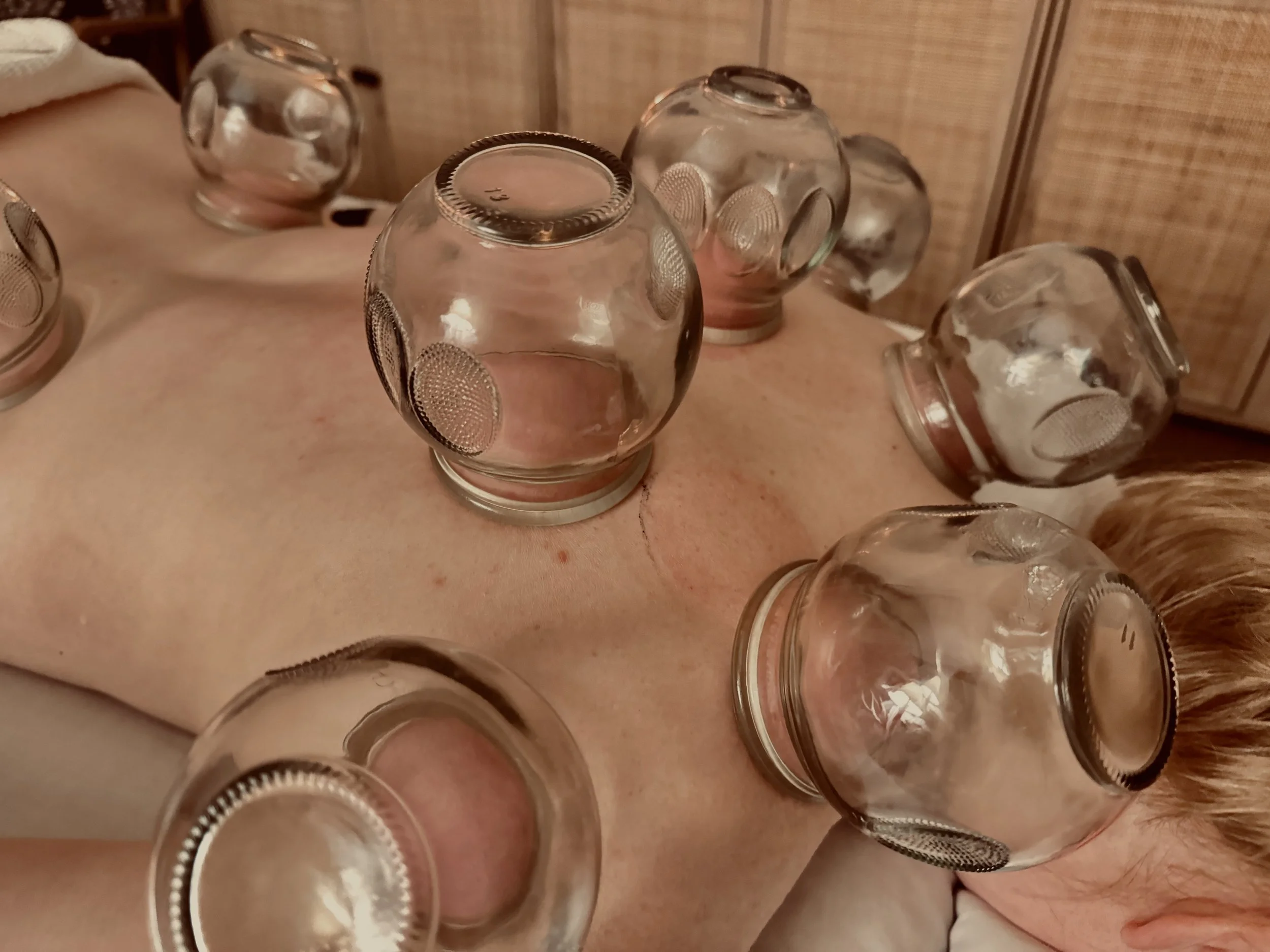
Unlike massage, which applies pressure into the body, cupping works by creating gentle suction that lifts the skin and underlying tissues. This pulling action helps release tension, improve blood flow, and support the body’s natural healing processes.
What Happens During a Cupping Session?
During a cupping treatment, cups are placed on the skin—most commonly on the back, shoulders, hips, or legs. The suction may be static (cups stay in place) or moving (the cups glide across the skin using medicated massage oils).
The sensation is often described as a deep stretch or release rather than pain. Many people find cupping surprisingly relaxing, especially when tight or overworked muscles finally let go.
Medicated herbal oils are often applied before moving cupping. These oils are chosen to:
Increase circulation
Reduce pain and inflammation
Support muscle recovery
Nourish tissues and fascia
Cupping in Traditional Chinese Medicine
In TCM, pain and injury are often caused by stagnation—when blood, Qi (vital energy), or fluids are not moving freely. Cupping helps “pull” stagnation to the surface, allowing fresh blood and nutrients to flow back into the area.
This is why cupping is commonly used for:
Muscle tightness and soreness
Sports injuries
Chronic pain
Limited range of motion
Recovery after intense training
Why Athletes Use Cupping
Athletes frequently use cupping because it:
Speeds up muscle recovery
Reduces post-exercise soreness
Improves circulation and oxygen delivery
Helps break up fascial restrictions
Supports joint and soft tissue mobility
Cupping is especially useful when muscles are tight, inflamed, or overworked—conditions common in high-performance training and repetitive movement.
Understanding the Cupping Marks (Bruising)
The circular marks left by cupping are not traditional bruises from trauma. They are a result of blood and metabolic waste being drawn to the surface.
The color of the marks offers insight into tissue health:
Light pink: mild stagnation, healthy circulation
Red: increased heat or inflammation
Purple or dark red: deeper stagnation or chronic tension
Brown or very dark: long-standing restriction or poor circulation
These marks are painless, fade within a few days to a week, and often lighten more quickly with repeated treatments as circulation improves.
The Takeaway
Cupping therapy is a powerful yet gentle technique that supports circulation, recovery, and pain relief—making it a favorite in both traditional medicine and modern athletic care.
By improving flow and releasing deep tension, cupping helps the body recover faster and move more freely. When paired with medicated oils and skilled application, it becomes an effective tool for healing, performance, and long-term resilience.
If your body feels tight, overworked, or slow to recover, cupping may be exactly the reset it needs.
Cupping available in the 70 or 90 minute Acupuncture session.