
Understanding Spleen Qi: The Foundation of Energy, Blood, and Immunity
Spleen Qi
In Traditional Chinese Medicine (TCM), the Spleen is one of the most important organs for overall health. It is responsible for transforming food into energy, building blood, and supporting immune strength.
When Spleen Qi is strong, digestion is efficient, energy is steady, the immune system is resilient, and the body feels grounded and nourished. When it is weak, symptoms often ripple throughout the entire system.
What Is Spleen Qi?
In TCM, the Spleen governs transformation and transportation. This means it takes the food and fluids you consume and converts them into usable Qi (energy), Blood, and body fluids.
The Spleen also helps keep things “where they belong” holding blood within the vessels and supporting muscle tone and organ position. When the Spleen is weak, there can be issues related to blood vessels, heavy bleeding or anemia.
Spleen Qi is deeply connected to:
Blood production
The quality of your blood depends on how well food is digested and transformed.
Mental clarity
The Spleen houses the Yi, or intellect; weak Spleen Qi can lead to brain fog, worry, and overthinking.
Immune resilience
A strong Spleen supports Wei Qi (defensive Qi), the body’s immune shield.
How the Spleen Supports Immunity
From a biomedical standpoint, the spleen is a key immune and blood-filtering organ. It plays several essential roles:
Filters old or damaged red blood cells
Stores platelets and white blood cells
Supports immune surveillance, including natural killer (NK) cells and other immune cells that help identify and neutralize pathogens
Helps mount immune responses to bacteria and viruses in the bloodstream
In both TCM and modern medicine, the spleen is closely tied to blood health and immune defense—just described through different lenses.
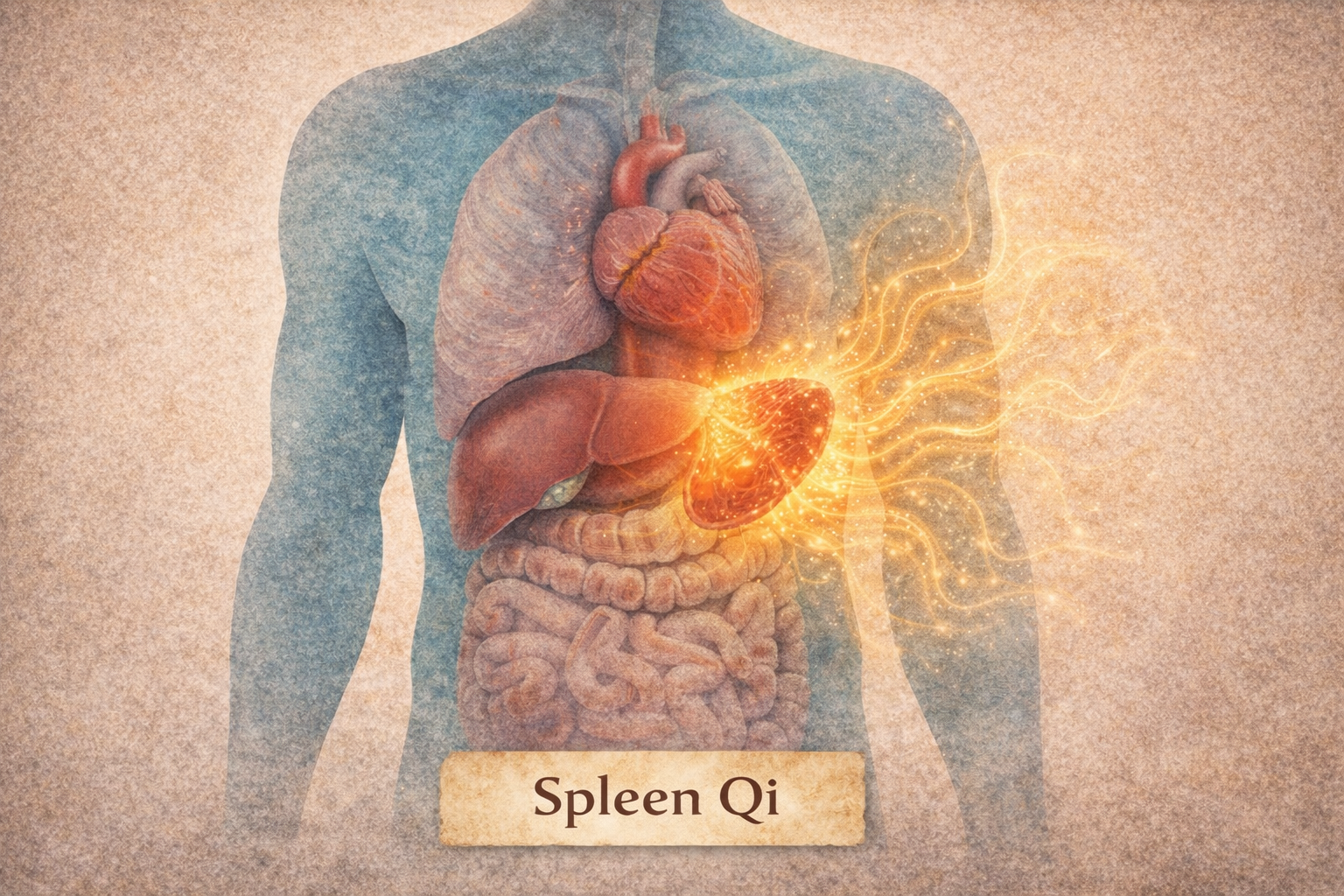
Spleen Qi, Blood, and Immune Cells
When Spleen Qi is strong:
Blood is well-nourished and circulates effectively
Natural killer cells and immune cells function optimally
Healing and recovery are more efficient
When Spleen Qi is weak, people may experience:
Fatigue or low stamina
Easy bruising or pale complexion
Frequent infections, illness or slow recovery
Brain fog, worry, or mental heaviness
chronic illness related to autoimmune conditions
chronic fatigue
allergies
The Spleen–Lung Connection
In Traditional Chinese Medicine, the Spleen and Lungs work as a team. The Spleen transforms food and fluids, while the Lungs distribute fluids and Qi throughout the body. When Spleen Qi is weak, fluids are not properly processed and can turn into phlegm or dampness, which then rises and settles in the Lungs.
This is why many respiratory symptoms begin in the digestive system.
Symptoms of Spleen–Lung Imbalance
Chronic mucus or post-nasal drip
Frequent throat clearing
Lingering cough, especially after illness
Shortness of breath
Sinus congestion or allergies
Fatigue with heavy feeling in body or limbs
bloated or puffy
These symptoms often worsen with cold foods, dairy, sugar, or damp weather.
Emotional Component
The Spleen is affected by worry and overthinking. Chronic mental strain weakens digestion, which in turn affects breathing and immune strength. Many people notice digestive upset and respiratory symptoms during prolonged stress.
Why Cold Foods Weaken Spleen Qi
In TCM, the Spleen prefers warmth. Cold or raw foods—such as smoothies, iced drinks, yogurt, cold cereal, and salads—can weaken digestive fire. Think of digestion like cooking: adding cold foods is like throwing cold water on a flame. Over time, this slows enzyme activity, fermentation balance, and nutrient absorption.
Warm, cooked foods support:
Better digestion
Stronger Qi and Blood production
Improved immune resilience
Less dampness (mucus, bloating, heaviness, congestion)
Nourishing Foods That Strengthen Spleen Qi
Focus on warm, grounding, easy-to-digest foods, especially when energy is low or immunity is compromised:
Cooked grains: rice, oats, millet, quinoa
Root vegetables: sweet potato, squash, carrots, beets
Protein: chicken, turkey, eggs, bone broth, lentils, beans
Warming spices: ginger, cinnamon, cardamom, anise, fenugreek
Soups and stews: especially during colder months or illness. Add onions and garlic, which are rich in quercetin and antioxidants that fight Lung infections, and boost immunity.
Limit or avoid:
Iced beverages
Excess sugar
Raw or heavily processed foods
Dairy if digestion is weak
Weak digestion symptoms: loose stool or constipation, sticky stool, constant throat clearing, sinus congestion, bloating, gas etc.)
3 Key Takeaways
Digestion is the root of energy and immunity
If digestion is weak, energy, blood, and immune function suffer—even with a healthy diet.
Warm foods heal and strengthen the body
Supporting the Spleen with cooked, warming meals improves nutrient absorption and immune resilience.Mental clarity and immunity are connected to the gut
Brain fog, worry, fatigue, and frequent illness often point back to weakened Spleen Qi.
When you nourish the Spleen, you nourish the entire system. Strong Spleen Qi creates the foundation for steady energy, healthy blood, and a resilient immune response—allowing the body to thrive rather than just survive.