
Why You Wake Up at the Same Time Every Night: TCM Organ Clock
A Traditional Chinese Medicine View of the Chinese Body Clock

Waking up in the middle of the night—especially at the same time every night—can feel frustrating and mysterious. In Traditional Chinese Medicine (TCM), these patterns are not random. They are often viewed as signals from the body that certain organ systems are asking for support.
TCM uses a framework called the Chinese Body Clock, which maps organ activity across a 24-hour cycle. Each organ has a two-hour window when its energy (Qi) is most active. If sleep is disrupted during a specific time, it may reflect an imbalance in that organ’s energetic function.
This does not mean something is “wrong” with you—it means your body is communicating.
Let’s walk through the clock and what waking during each time window may suggest.
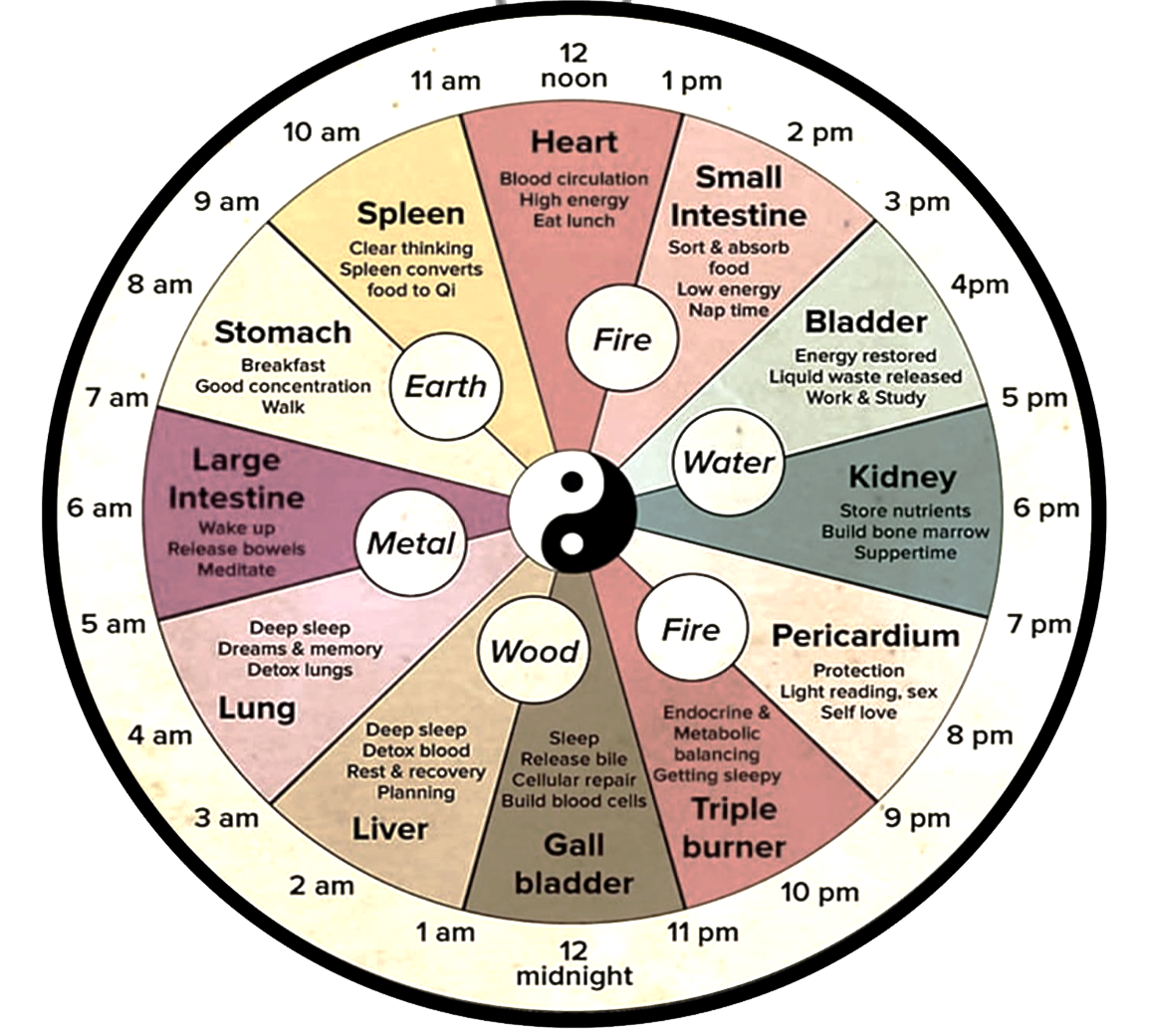
The Chinese Body Clock: Organ Systems & Nighttime Waking
9:00–11:00 PM — Triple Burner (San Jiao)
Theme: Regulation, stress response, hormones, nervous system
Common reasons for waking or trouble falling asleep:
Feeling wired but tired
Difficulty winding down
Mental overstimulation
This is the body’s transition from day mode to night mode. If stress hormones are elevated or the nervous system hasn’t shifted into parasympathetic (rest-and-digest) mode, sleep may feel elusive.
Supportive strategies:
Acupuncture to calm the nervous system
Gentle evening routines (dim lights, no screens)
Herbal formulas that support relaxation and circadian rhythm
Avoid intense exercise or stimulating conversations late at night
11:00 PM–1:00 AM — Gallbladder
Theme: Decision-making, courage, stored tension, bile metabolism
Common reasons for waking:
Racing thoughts or replaying decisions
Muscle tension (neck, shoulders, hips)
Difficulty “letting go” mentally
The Gallbladder governs decisiveness and stored tension. Waking here often reflects unresolved mental processing or physical tightness.
Supportive strategies:
Acupuncture to release muscle tension and regulate Liver/Gallbladder Qi
Light stretching or magnesium before bed
Avoid late, heavy, greasy meals
Journaling earlier in the evening to offload mental clutter
1:00–3:00 AM — Liver
Theme: Detoxification, emotional processing, smooth Qi flow
Common reasons for waking:
Waking wide awake
Feeling hot, restless, or irritated
Difficulty falling back asleep
This is one of the most common waking times. In TCM, the Liver supports smooth circulation of energy and blood and is closely tied to emotional stress.
Supportive strategies:
Acupuncture to soothe Liver Qi and calm internal heat
Herbal support for gentle Liver regulation
Limiting alcohol and late-night sugar
Cooling, calming evening practices (breathwork, gentle yin yoga)
3:00–5:00 AM — Lung
Theme: Breath, immunity, grief, letting go
Common reasons for waking:
Shallow breathing
Chest tightness
Feelings of sadness or heaviness
Early-morning anxiety
The Lungs are associated with grief and the ability to release. Waking here may reflect emotional processing, respiratory sensitivity, or immune strain.
Supportive strategies:
Acupuncture to support Lung Qi and calm the nervous system
Breathing exercises before bed
Humidifying dry bedroom air
Herbal teas that gently moisten and support the respiratory system
5:00–7:00 AM — Large Intestine
Theme: Elimination, release, boundaries
Common reasons for waking too early:
Urge to use the bathroom
Restless sleep close to waking time
Difficulty staying asleep
The Large Intestine governs elimination—both physical and emotional. Waking here may reflect digestive timing or difficulty releasing stress.
Supportive strategies:
Acupuncture to regulate digestion and bowel rhythms
Adequate hydration during the day (not late at night)
Consistent sleep and wake times
Supporting regular elimination earlier in the day
Why These Patterns Repeat
From a TCM perspective, repeated nighttime waking often reflects:
Nervous system imbalance
Stress held in specific organ systems
Digestive or metabolic strain
Emotional processing that hasn’t fully resolved
Rather than suppressing symptoms, TCM focuses on supporting regulation, allowing sleep to normalize naturally.
How Acupuncture Supports Sleep Patterns
Acupuncture helps by:
Regulating the autonomic nervous system
Supporting parasympathetic (rest-and-digest) tone
Improving circulation of Qi and blood
Calming the mind and body before sleep
Many patients notice that as organ systems become more balanced, they stop waking at the same time each night—often without needing sleep medications.
Herbal Support & Sleep Hygiene
Herbs work best when paired with lifestyle support. Depending on the pattern, herbal formulas may:
Nourish Yin and blood
Calm the spirit (Shen)
Support Liver or Lung function
Promote deeper, more restorative sleep
Simple sleep hygiene tips that matter more than you think:
Consistent bedtime (even on weekends)
No screens 60–90 minutes before bed
Warm, cooked dinners eaten earlier in the evening
Dark, cool, quiet sleep environment
The Takeaway
Waking at the same time every night isn’t random—it’s your body asking for support.
The Chinese Body Clock offers a compassionate lens for understanding sleep patterns, helping you work with your body rather than against it. With acupuncture, herbal support, and intentional lifestyle changes, sleep can become deeper, steadier, and more restorative.
If nighttime waking has become your norm, it may be time to listen more closely to what your body is saying.